


Rules of Origin: 7 Essential Facts Every Importer Must Know

Rules of Origin: 7 Essential Facts Every Importer Must Know
In international trade, knowing the rules of origin is essential for importers, exporters, manufacturers, and customs professionals. These rules determine the country in which a product is considered to have been produced or manufactured. This information can directly affect customs duties, trade agreements, import restrictions, product labeling, and customs clearance.
Many businesses assume that the country from which goods are shipped is automatically their country of origin. However, this is not always correct. A product may be shipped from one country while legally originating in another.
For example, if an exporter purchases dried fruits from one country, stores them in another, and then ships them to a third market, the shipping country does not automatically become the product’s country of origin.
Understanding these rules can help businesses avoid customs disputes, unexpected duties, incorrect declarations, and costly delays.
Table of Contents
- What Are Rules of Origin in International Trade?
- Preferential vs. Non-Preferential Rules of Origin
- How Is the Country of Origin Determined?
- What Is a Certificate of Origin?
- Why Rules of Origin Matter for Importers and Exporters
- Common Mistakes Businesses Should Avoid
- How to Check the Rules of Origin Before Shipping
- Frequently Asked Questions
- What Are Rules of Origin in International Trade?
The rules of origin are the legal criteria used by customs authorities to determine the economic nationality of goods. In simple terms, they establish where a product is considered to originate.
These rules are important because customs authorities need to know the origin of imported products before deciding which trade measures and tariff treatments apply.
The country of origin can influence:
- Import duties and preferential tariff rates.
- Anti-dumping and countervailing duties.
- Import restrictions and trade measures.
- Quotas and other market-access conditions.
- Country-of-origin labeling requirements.
- International trade statistics.
It is important to distinguish between the country of origin and the country of shipment. The country of shipment is where the goods are dispatched, while the country of origin is determined according to the applicable origin rules.
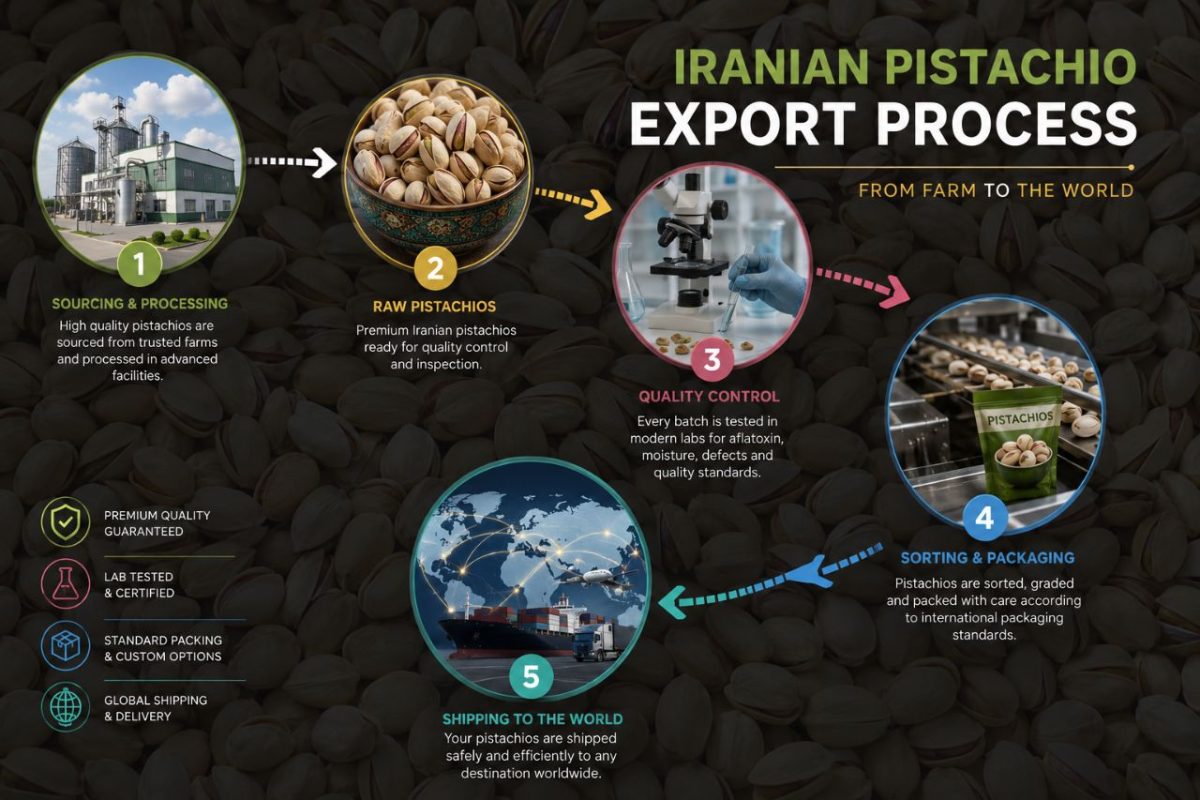
For example, Iranian pistachios shipped from a warehouse in the United Arab Emirates do not automatically become products of the UAE. Their origin must be determined according to the applicable customs rules and the actual production history.
The World Trade Organization (WTO) recognizes rules of origin as an important part of international trade administration because they help determine how goods are treated under different trade policies.
- Preferential vs. Non-Preferential Rules of Origin
One of the most important concepts in international trade is the difference between preferential and non-preferential rules of origin. Although both determine the origin of goods, they serve different purposes.
Preferential Rules of Origin
Preferential rules of origin determine whether a product qualifies for reduced or zero customs duties under a specific trade agreement or preferential arrangement.
Countries that have established free trade agreements or other preferential arrangements may offer lower import duties to qualifying products originating in partner countries.
However, simply shipping goods from a country that has a trade agreement with the destination market is not enough. The product must satisfy the specific origin conditions established by that agreement.
These conditions may require that goods are entirely obtained in a country or undergo a sufficient level of production or processing there.
For example, a food product manufactured using imported ingredients may qualify for preferential origin only if its production process satisfies the relevant product-specific origin rule.
Non-Preferential Rules of Origin
Non-preferential rules of origin are used when determining the origin of goods for general customs and trade policy purposes.
They can affect:
- Most-favoured-nation (MFN) tariff treatment.
- Anti-dumping and countervailing duties.
- Trade restrictions and sanctions.
- Import quotas and safeguard measures.
- Country-of-origin marking.
- International trade statistics.
A product may have a non-preferential origin even when it does not qualify for preferential tariff treatment.
The European Commission and the WTO provide official guidance explaining these two categories and their different applications.
- How Is the Country of Origin Determined?
Determining the origin of a product depends on how it was produced, where its raw materials came from, and what processing took place.
Two important concepts are commonly used in origin rules: wholly obtained products and substantial transformation or sufficient processing.
Wholly Obtained Products
Some products are considered to originate in the country where they are entirely grown, harvested, extracted, or produced.
Agricultural products are a clear example.
For instance:
- Pistachios harvested in Iran generally qualify as products wholly obtained in Iran.
- Dates grown and harvested in Iran generally have Iranian origin.
- Raisins produced from grapes grown and processed in a country may qualify as originating there, subject to the applicable rules.
- Saffron harvested from flowers grown in a country generally has its origin in that country.
For agricultural exporters, this concept is particularly important because the origin of the product is often directly connected to its place of cultivation and harvesting.
Substantial Transformation or Sufficient Processing
When a product involves materials or components from multiple countries, the origin may depend on the processing performed during production.
Depending on the applicable legal framework, a product may acquire origin in the country where it undergoes substantial transformation or satisfies a specific processing requirement.
However, not every operation changes the origin of goods.
Simple activities such as repackaging, sorting, labeling, cleaning, or storing products do not automatically establish a new country of origin.
For example, if Iranian raisins are shipped to another country and placed into new retail packaging there, the packaging operation alone does not necessarily change their Iranian origin.
The exact test depends on the destination country’s legislation and, where applicable, the relevant trade agreement. It may involve a change in tariff classification, a specific manufacturing process, or a value-added requirement.
- What Is a Certificate of Origin?
A Certificate of Origin (CO) is a trade document used to declare or support the country of origin of exported goods.
It is commonly requested by importers, customs authorities, banks, and other parties involved in international transactions.
Depending on the trade arrangement and destination requirements, a certificate of origin may be issued or authenticated by an authorized chamber of commerce or another designated authority.
There are different forms of origin evidence, including:
Non-Preferential Certificate of Origin: Used to declare the general country of origin of goods when required by the destination market or the transaction.
Preferential Proof of Origin: Used to support a claim for reduced or zero customs duties under a qualifying trade agreement. Depending on the agreement, this may take the form of a certificate, an origin declaration, or another approved document.
A certificate of origin should not be confused with a certificate of analysis, health certificate, phytosanitary certificate, or commercial invoice. Each document serves a different purpose.
For example, when exporting dried fruits, an importer may request a commercial invoice, packing list, certificate of origin, certificate of analysis, and other documents depending on the product and destination.
It is also important to understand that a certificate does not create origin by itself. The goods must actually satisfy the applicable origin rules. If customs authorities find that the declared origin is incorrect, the preferential treatment may be refused and additional duties may become payable.
- Why Rules of Origin Matter for Importers and Exporters
Origin rules are not merely administrative requirements. They can have a direct financial and legal impact on international transactions.
For importers, the origin of goods can determine the customs duty rate and whether additional trade measures apply. Incorrect origin information may lead to customs delays, penalties, reassessment of duties, or other legal consequences.
For exporters, accurate origin declarations are important for preparing documents, meeting buyer requirements, and ensuring that shipments comply with the destination market’s regulations.
Consider a wholesale buyer purchasing Iranian pistachios for distribution in a foreign market. Before placing the order, the buyer may need to confirm the declared origin, applicable import duties, food safety requirements, and any restrictions affecting the transaction.
The same considerations apply to dates, raisins, dried figs, barberries, saffron, and other agricultural products.
Businesses should also remember that origin requirements may differ between destination markets. A product that qualifies under one trade agreement may not qualify under another.
Therefore, exporters should not assume that one certificate or origin rule is universally accepted in every country.
- Common Mistakes Businesses Should Avoid
Errors involving rules of origin can create unnecessary costs and complications. Some of the most common mistakes include:
Confusing the country of shipment with the country of origin: Goods do not automatically acquire the origin of the country from which they are exported.
Assuming repackaging changes origin: Changing cartons, labels, or retail packaging does not automatically establish a new origin.
Using the wrong preferential origin claim: A product must meet the specific requirements of the relevant trade agreement before claiming a reduced tariff.
Providing incorrect origin information: The country of origin stated on commercial documents should be consistent with the actual production history and applicable legal requirements.
Ignoring destination-specific regulations: Origin rules can vary between countries and trade agreements. Always check the rules applicable to the importing market.
Relying only on a supplier’s statement: Importers should request appropriate supporting evidence and verify the origin information before claiming preferential treatment.
Avoiding these mistakes can help businesses reduce customs risks and maintain more reliable international trade operations.
- How to Check the Rules of Origin Before Shipping
Before arranging an international shipment, importers and exporters should verify the origin requirements for the specific product and destination market.
A practical approach includes the following steps:
- Identify the correct HS code: Product classification is often essential for locating the applicable origin rule.
- Confirm the actual country of production: Identify where the goods were grown, harvested, manufactured, or processed.
- Check the destination country’s customs regulations: Do not assume that origin rules are identical across different markets.
- Review applicable trade agreements: Determine whether a preferential arrangement exists and whether the product can qualify.
- Identify the required proof of origin: Confirm whether the importer needs a certificate, declaration, or other supporting evidence.
- Verify supporting documents: Make sure that invoices, packing lists, origin evidence, and other shipping documents contain consistent information.
For businesses exporting to or importing into the European Union, the European Commission’s Access2Markets platform is a useful official resource for checking tariffs, origin requirements, and other market-access information.
Frequently Asked Questions
- What are rules of origin in international trade?
Rules of origin are the legal criteria used to determine the country in which goods are considered to have been produced or manufactured. They influence customs duties, trade measures, labeling, and market access.
- Is the country of origin the same as the country of shipment?
No. The country of shipment is where the goods are dispatched, while the country of origin is determined by the applicable production and processing rules.
- Does repackaging change the country of origin?
Generally, simple repackaging, labeling, or storage does not automatically change the origin of goods. The applicable customs rules determine which production activities are sufficient to confer origin.
- What is the difference between preferential and non-preferential origin?
Preferential origin determines whether goods qualify for reduced or zero duties under a trade agreement or preferential arrangement. Non-preferential origin is used for general customs treatment and other trade policy measures.
- Is a Certificate of Origin mandatory for every export shipment?
No. The requirement depends on the destination country, product, trade agreement, customs procedures, and buyer’s documentation requirements. Some markets or transactions may accept other forms of origin evidence.
- Can a product qualify for preferential tariffs without being entirely produced in one country?
Yes, in certain cases. A product may qualify if it undergoes sufficient processing according to the specific origin rules of the applicable trade agreement.
Conclusion: Understand Origin Before You Ship
Rules of origin are an essential part of international trade. They determine how goods are treated by customs authorities and can influence duties, trade restrictions, documentation, and market access.
For importers and exporters, understanding the difference between country of origin and country of shipment is especially important. Businesses should verify the actual origin of their products, review destination-specific requirements, and prepare appropriate supporting documents before dispatch.
For companies trading agricultural products such as pistachios, dates, raisins, dried figs, barberries, and saffron, accurate origin information is an important part of professional export management.
At HGH Trade, we understand the importance of product origin, export documentation, and clear commercial specifications when coordinating international agricultural product supplies. For wholesale inquiries and product information, visit “HGHtrade” and contact our team.