


10 Costly International Trade Mistakes and How to Avoid Them

10 Costly International Trade Mistakes and How to Avoid Them
International trade mistakes can turn a promising business opportunity into an expensive problem. A shipment may be delayed because of incorrect documents, a buyer may fail to pay on time, or an exporter may discover that the agreed delivery price does not cover all expected costs.
These problems can affect businesses of every size, from first-time exporters to established international distributors. The good news is that many risks can be reduced through careful planning, clear contracts, reliable communication, and proper verification before a transaction begins.
Whether you import food products, export agricultural commodities, purchase industrial materials, or distribute consumer goods, understanding the most common international trade mistakes can help you protect your money and build stronger business relationships.
This guide explains 10 common mistakes in international trade, why they happen, and what importers and exporters can do to avoid them.
Table of Contents
- Choosing an unreliable trading partner
- Agreeing to unclear payment terms
- Ignoring contract details
- Using the wrong Incoterms rule
- Preparing incorrect export documents
- Underestimating shipping and logistics costs
- Ignoring product quality requirements
- Failing to check import regulations
- Sharing money or sensitive information too quickly
- Poor communication and unrealistic promises
- International trade checklist
- Frequently asked questions
- Choosing an Unreliable Trading Partner
One of the most serious international trade mistakes is entering into a business relationship without properly checking the other party.
A professional-looking website, company logo, social media account, or email address does not prove that a business is legitimate or financially reliable.
An importer may claim to represent a large distributor without having purchasing authority. Similarly, an exporter may promise a volume of goods that it cannot actually supply.
How to avoid this mistake
Before committing to a substantial transaction:
- Verify the company’s legal name and registration details where available.
- Check its official website, business address, and contact information.
- Confirm that the person negotiating has authority to represent the company.
- Request relevant trade references when appropriate.
- Verify purchasing requirements and delivery arrangements directly.
- Consider an independent inspection or other due diligence for higher-value transactions.
For a first transaction, use a carefully structured agreement and avoid committing more money than the verified circumstances justify.
Practical tip: A genuine business partner should be willing to discuss specifications, payment arrangements, documentation, and responsibilities clearly.
- Agreeing to Unclear Payment Terms
Payment problems can be particularly damaging in international trade because recovering an unpaid amount across borders may be difficult and expensive. The US Department of Commerce’s trade guidance recommends assessing payment risk and conducting appropriate credit checks before extending credit. “Read its guidance on payment problems”
A common mistake is agreeing to terms such as “payment after delivery” without specifying a deadline, required documents, or what happens if payment is delayed.
Another risk is shipping valuable goods to a new customer on open-account terms without adequate credit assessment or protection.
How to avoid this mistake
Define the following points before production or shipment:
- The deposit amount, if applicable.
- When the remaining balance must be paid.
- Which documents trigger a payment obligation.
- The accepted payment method and currency.
- Responsibility for banking charges.
- Procedures for resolving a payment dispute.
- Whether credit insurance, a bank instrument, or another safeguard is appropriate.
Possible arrangements include advance payment, partial advance payment, documentary credit, documentary collection, and open-account terms. Each has different costs, benefits, and risks.
For example, a seller and a new buyer might agree to an advance payment followed by a balance payment against specified shipping documents. The exact arrangement must be agreed in writing and should not be treated as a guarantee against every possible risk.
- Ignoring Contract Details
A quotation is not always a complete sales contract. If important conditions remain unclear, the buyer and seller may develop different expectations about the same transaction.
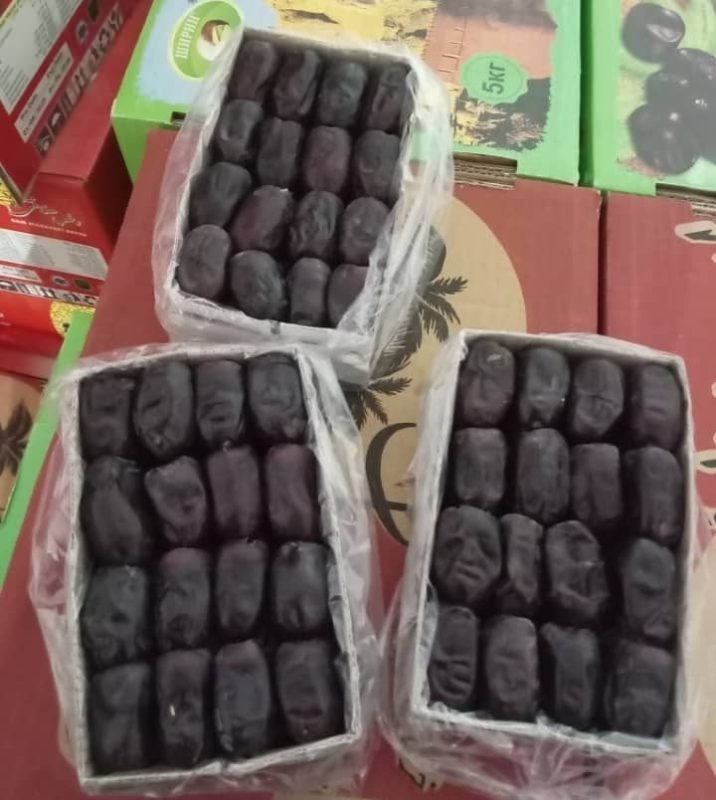
For example, a buyer might expect premium-grade dried fruit, while the seller believes that a lower commercial grade was agreed. A dispute can also arise over acceptable defects, packaging, delivery dates, or responsibility for inspection.
How to avoid this mistake
A well-prepared contract should identify:
- The legal names of the buyer and seller.
- Product descriptions and technical specifications.
- Quantity and acceptable tolerances.
- Unit price, total price, and currency.
- Packaging and labeling requirements.
- Delivery terms and named delivery location.
- Payment schedule and required documents.
- Quality inspection and acceptance procedures.
- Remedies for non-conforming goods.
- Procedures for disputes and contract changes.
When agricultural products are involved, define measurable quality criteria wherever possible. For example, specify the agreed grade, size, moisture range, foreign-matter limits, and relevant laboratory tests rather than relying only on descriptions such as “premium quality.”
The contract should also identify which law governs the agreement and how disputes will be handled, with suitable professional advice where needed.
- Using the Wrong Incoterms Rule
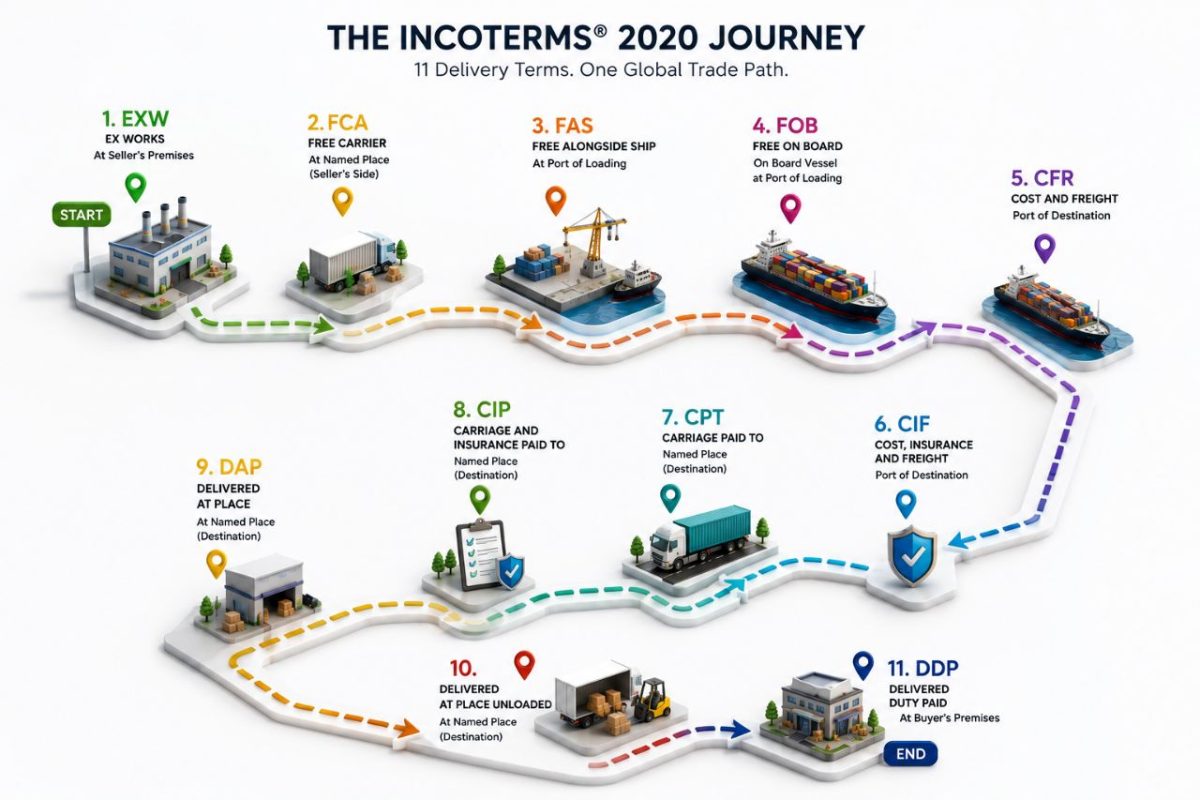
Incoterms rules clarify certain responsibilities, costs, and risks between buyers and sellers. However, choosing the wrong rule or failing to specify the named place can create confusion about transportation, delivery, insurance, and customs responsibilities.
The International Chamber of Commerce publishes the Incoterms 2020 rules, which contain 11 trade terms. “See the official ICC Incoterms information”
How to avoid this mistake
Choose the rule based on the actual transport arrangement and the responsibilities each party can fulfill.
For example:
- EXW: The seller makes the goods available at the agreed location, subject to the rule’s requirements.
- FCA: The seller delivers the goods to the carrier or other nominated party at the agreed place.
- CPT: The seller pays for carriage to the named destination, while risk transfers according to the rule’s delivery provisions.
- CIP: Similar to CPT, but the seller also arranges the insurance required under the rule.
- DAP: The seller delivers the goods to the named destination ready for unloading.
- FOB: Used for sea and inland waterway transport, with delivery and risk transfer tied to loading on board the vessel.
- CIF: Used for sea and inland waterway transport, with the seller arranging the required minimum insurance coverage under the rule.
These are brief explanations, not substitutes for the full rules.
Always state the selected Incoterms rule, version, and precise named place in the contract. Incoterms do not, by themselves, determine payment timing, transfer of ownership, or every contractual obligation.
- Preparing Incorrect Export Documents
Incorrect or inconsistent documentation can delay customs clearance, increase costs, or prevent goods from being released.
A common problem occurs when the commercial invoice, packing list, transport document, and product information contain conflicting quantities, weights, descriptions, or party details.
For example, if the invoice lists one net weight while the packing list shows another, customs officials or the buyer may request clarification.
How to avoid this mistake
Prepare and cross-check the documents required for the particular shipment. Depending on the product and destination, these may include:
- Commercial invoice.
- Packing list.
- Bill of lading, air waybill, or road transport document.
- Certificate or declaration of origin, where applicable.
- Product-specific inspection or health certificates.
- Laboratory analysis or other technical documents.
- Import permits or licenses, where required.
Requirements vary by destination, product classification, origin, and transport method. Do not assume that every shipment needs the same documents.
For EU-bound goods, the European Commission’s “Access2Markets portal” provides information about tariffs, product requirements, customs procedures, and trade documentation. Its guidance on “customs clearance documents and procedures” explains the role of commercial invoices, packing lists, and transport documents.
Practical tip: Use one agreed source of product and shipment data to prepare the commercial documents, then verify them before the goods leave.
- Underestimating Shipping and Logistics Costs
A competitive product price does not automatically mean a competitive delivered price.
Importers and exporters sometimes calculate only the factory price and ocean or road freight. They may overlook inland transportation, handling, insurance, inspection, storage, customs duties, port charges, or delivery to the final warehouse.
Unexpected expenses can reduce profit or make an offer commercially unattractive.
How to avoid this mistake
Prepare a shipment cost calculation that includes all relevant items:
- Product purchase cost.
- Export packing and preparation.
- Inland transport to the departure point.
- Export clearance and applicable charges.
- Main freight.
- Cargo insurance, where arranged or required.
- Destination handling and clearance.
- Applicable duties and taxes.
- Final delivery and other agreed expenses.
Not every cost applies to every transaction. Allocate each expense according to the contract and selected delivery term.
Request current freight quotations and confirm their validity period, included services, exclusions, and possible surcharges.
For perishable or temperature-sensitive products, also evaluate transit time, storage conditions, and the risk of quality deterioration.
- Ignoring Product Quality Requirements
Quality problems can damage the buyer’s business and the supplier’s reputation. A shipment may arrive with damaged packaging, inconsistent grades, unexpected moisture levels, contamination, or a product that differs from the approved sample.
These risks are especially important for food products, agricultural commodities, and ingredients used in manufacturing.
How to avoid this mistake
Before production or packing, agree on a written specification covering the product’s relevant characteristics.
For dried fruit and nuts, the specification may include:
- Variety and origin.
- Grade, size, and appearance.
- Moisture content and acceptable tolerances.
- Foreign matter and damaged-product limits.
- Relevant microbiological and chemical criteria.
- Packaging and storage requirements.
- Sampling and inspection procedures.
Where appropriate, use a representative pre-shipment sample, independent inspection, or laboratory analysis.
A laboratory report should be relevant to the product and batch in question. An old report or a test from a different lot may not establish that the current shipment complies with the contract or destination requirements.
For food products, confirm the applicable legal requirements and ensure that quality claims can be supported by suitable evidence.
- Failing to Check Import Regulations
A product that can be exported from one country is not necessarily eligible for import into every destination.
Import restrictions, customs duties, product standards, labeling requirements, permits, and food-safety rules vary by jurisdiction. Requirements can also change over time.
This is particularly important when trading agricultural products, processed foods, and products subject to specific origin-based restrictions or trade measures.
How to avoid this mistake
Before confirming an order:
- Verify the correct customs classification.
- Check the applicable import duties and taxes.
- Confirm whether the product and origin are eligible.
- Identify required permits, registrations, and certificates.
- Review labeling and packaging requirements.
- Confirm any applicable sanctions or trade restrictions.
- Consult the destination country’s official authorities or a qualified customs professional.
For trade with the European Union, the European Commission’s “Access2Markets” is a useful starting point for researching product-specific requirements.
Never rely solely on a buyer’s assurance that all import formalities will be handled. Confirm responsibilities and eligibility before production or shipment.
- Sharing Money or Sensitive Information Too Quickly
International transactions can involve advance payments, samples, banking information, contracts, and identity or company documents. A lack of verification can expose either party to fraud, payment diversion, or misuse of confidential information.
One warning sign is an unexpected request to change bank account details shortly before payment. Another is pressure to pay an unfamiliar third party without a clear contractual reason.
How to avoid this mistake
Use a documented verification process:
- Confirm bank-account changes through a separate, previously verified communication channel.
- Check that payment instructions match the agreed contract and beneficiary.
- Verify unexpected requests directly with an authorized company representative.
- Share sensitive documents only when necessary and with appropriate safeguards.
- Avoid sending funds to unrelated parties without verified authorization.
- Keep records of quotations, contracts, invoices, and payment instructions.
For larger or higher-risk transactions, consider independent legal, banking, or trade-finance advice.
No single verification method eliminates all fraud risk. Multiple checks are more reliable than trusting an email, phone call, or document in isolation.
- Poor Communication and Unrealistic Promises
International trade involves different time zones, languages, business practices, and expectations. Misunderstandings can arise when a supplier promises a delivery date without checking production capacity or when a buyer changes specifications after the contract is signed.
Overpromising can damage trust even when there is no intention to mislead.
How to avoid this mistake
Communicate in a clear, documented, and realistic way.
- Confirm specifications and quantities in writing.
- Provide realistic production and delivery estimates.
- Respond to questions within a reasonable time.
- Notify the other party promptly if a delay or problem arises.
- Document approved changes to the contract.
- Avoid making quality, certification, or delivery claims that cannot be verified.
For businesses working across languages, use clear commercial English and avoid vague expressions. Instead of saying “shipment soon,” specify an estimated shipping date or agreed delivery window.
Reliable communication is not simply about responding quickly. It is about providing accurate information and following through on commitments.
International Trade Checklist Before You Sign a Deal
Use this checklist to review a proposed transaction before committing funds or shipping goods.
- The buyer and seller have been appropriately verified.
- The product specification and quantity are clearly defined.
- Price, currency, and payment terms are agreed.
- The contract identifies delivery responsibilities and the named place.
- The Incoterms rule is suitable for the shipment.
- The total shipment cost has been calculated.
- Import eligibility and regulatory requirements have been checked.
- Required documents and certificates have been identified.
- Quality inspection and acceptance procedures are agreed.
- Payment instructions and key communications have been verified.
- Delivery dates and responsibilities are realistic and documented.
Not every transaction requires the same level of due diligence. The depth of checks should reflect the value of the shipment, the product, the destination, the parties’ track record, and the risks involved.
Frequently Asked Questions
What are the most common international trade mistakes?
Common mistakes include failing to verify business partners, agreeing to unclear payment terms, using incomplete contracts, choosing unsuitable Incoterms, preparing inconsistent documents, underestimating logistics costs, overlooking quality standards, and failing to check import regulations.
How can a new exporter reduce financial risk?
A new exporter can reduce risk by verifying buyers, using written contracts, defining payment milestones, checking destination requirements, and considering appropriate payment-security or credit-risk measures. The right approach depends on the transaction and the parties’ circumstances.
Why are Incoterms important in international trade?
Incoterms clarify certain delivery obligations, costs, and risks between buyers and sellers. They help prevent misunderstandings, but they do not replace a full sales contract or determine payment timing and ownership transfer.
Which documents are required for international shipping?
Common documents include a commercial invoice, packing list, and transport document. Other requirements may include proof of origin, permits, inspection certificates, health certificates, or product-specific documentation. The exact list depends on the goods, origin, destination, and transport method.
How can importers verify a foreign supplier?
Importers can check registration details where available, verify company contacts, request samples and relevant documents, assess production or sourcing capability, and consider independent inspection or other due diligence for substantial orders.
Is the lowest quotation always the best choice?
No. A low quotation may exclude important costs or involve differences in quality, packaging, delivery terms, or payment risk. Compare offers using equivalent specifications and a realistic total landed cost.
Conclusion: Avoid Costly Mistakes and Build Better Trade Relationships
Successful international trade requires more than finding a buyer or seller and agreeing on a price. Businesses need reliable partners, clear contracts, suitable payment terms, accurate documentation, realistic logistics calculations, and verified compliance with destination requirements.
The most effective way to manage international trade mistakes is to identify risks before money changes hands or goods are shipped. A structured checklist and clear communication can help importers and exporters make better decisions, protect their commercial interests, and build long-term relationships.
At HGHtrade, we believe that successful trade cooperation starts with clear specifications, transparent communication, and a practical understanding of each business partner’s requirements.
Planning your next international trade transaction? Visit “HGHtrade” to learn more about our business and explore potential cooperation in agricultural products and dried fruits.