


Страны-импортеры фиников: 10 лучших рынков для покупателей со всего мира

Страны-импортеры фиников: 10 лучших рынков для покупателей со всего мира
Date importing countries offer valuable opportunities for exporters, wholesalers, food distributors, and manufacturers seeking reliable sources of date fruit. From large-volume markets in Asia to established retail and distribution networks in Europe, international demand creates opportunities for different date varieties, packaging formats, and price segments.
For exporters, identifying the right market is about more than finding countries that import dates. It requires understanding import values, purchasing volumes, consumer preferences, quality standards, logistics, and the requirements of local buyers.
This guide examines 10 important date-importing countries using 2024 international trade data and explains how exporters can evaluate potential markets for wholesale cooperation.
Оглавление
- Overview of the global date market
- Top 10 date importing countries
- What makes these markets attractive?
- How to choose the right export market
- Requirements for international date buyers
- How to find reliable date suppliers
- Часто задаваемые вопросы
- Заключение
Overview of the Global Date Market
Dates are traded internationally as fresh or dried fruit and are used in retail, food service, food processing, confectionery, and bakery production. They are also sold as ingredients for date paste, energy bars, desserts, and other food products.
According to international trade data for 2024, India was the leading individual country by import value for fresh or dried dates, followed by Morocco and the United Arab Emirates. France, the Netherlands, Türkiye, Germany, the United States, the United Kingdom, and Indonesia were also among the leading importing markets.
The figures below refer to HS code 080410, which covers dates, fresh or dried. They are based on reported 2024 trade data compiled from international trade statistics. Actual commercial opportunities depend on the product specification, supplier eligibility, and destination-market requirements.
Top 10 Date Importing Countries
The following ranking uses reported 2024 import value, rather than population or estimated consumer demand.
Rank | Country | Import value in 2024
1 | India | US$287.3 million
2 | Morocco | US$244.5 million
3 | United Arab Emirates | US$201.1 million
4 | France | US$128.3 million
5 | Netherlands | US$113.4 million
6 | Türkiye | US$112.3 million
7 | Germany | US$109.9 million
8 | United States | US$106.3 million
9 | United Kingdom | US$101.2 million
10 | Indonesia | US$77.4 million
Source: 2024 trade data for HS 080410 compiled by Commodity Origins using CEPII BACI data. Values are rounded. The European Union is not listed separately because this ranking compares individual countries.
- India: A Major Market for Wholesale Dates
India ranked first among individual countries by date import value in 2024, with approximately US$287.3 million in imports. Reported import volume was around 523,098 tonnes, making India particularly significant for suppliers capable of serving large orders.
The market includes dates for household consumption, seasonal demand, wholesale distribution, and food processing. Buyers may evaluate several price and quality segments, depending on their target customers.
Opportunities for exporters:
- Bulk shipments for importers and wholesale distributors.
- Different grades and varieties for different price segments.
- Consistent quality and dependable supply schedules.
- Packaging suited to retail or food-service requirements.
Before quoting, exporters should confirm the buyer’s preferred variety, grade, moisture level, packaging, shipment size, and applicable import requirements.
- Morocco: An Important North African Market
Morocco imported approximately US$244.5 million worth of dates in 2024. Its position among the leading importers makes it an important market to investigate for exporters seeking North African buyers.
Demand can vary by variety, quality, price, and season. Importers may serve traditional markets, supermarkets, wholesalers, and food businesses.
Opportunities for exporters:
- Competitive wholesale offers.
- Consistent product grading and sorting.
- Reliable delivery schedules ahead of seasonal demand.
- Clear specifications and samples before larger orders.
Exporters should compare their landed cost with established supply sources and verify the documentation required by Moroccan authorities before negotiating a shipment.
- United Arab Emirates: A Regional Trading Hub
The United Arab Emirates imported approximately US$201.1 million in dates in 2024, with reported volume of around 211,466 tonnes.
The UAE is relevant not only as a consumer market but also as a regional trading and distribution hub. Some importers supply local retailers and food-service businesses, while others may re-export products to additional markets.
Opportunities for exporters:
- Bulk dates for wholesalers and distributors.
- Retail-ready products with customized packaging.
- Different varieties and grades for multiple customer groups.
- Long-term supply agreements with established trading companies.
Exporters should clarify whether a buyer intends to sell within the UAE or re-export the goods, as the destination can affect labeling, documentation, and logistics requirements.
- France: A Significant European Import Market
France imported approximately US$128.3 million worth of dates in 2024. Its established food retail and wholesale sectors make it a relevant destination for exporters targeting European buyers.
France’s import data also illustrate the importance of understanding existing supplier relationships. In 2024, Tunisia and Algeria were the two largest reported source countries for French date imports. This indicates that prospective suppliers should assess competition, pricing, and buyer preferences before entering the market.
Opportunities for exporters:
- Dates for ethnic food retailers and mainstream grocery distribution.
- Products for bakeries and food manufacturers.
- Bulk dates and processed date ingredients.
- Retail packaging that meets buyer specifications.
European buyers may require detailed traceability, food-safety documentation, compliant labeling, and appropriate testing. These requirements should be confirmed for the specific product and shipment.
- Netherlands: A Strategic Distribution Market
The Netherlands imported approximately US$113.4 million in dates in 2024.
Its role in European trade and distribution makes it a useful market for exporters investigating wholesale buyers, importers, and food distributors. However, import value alone does not establish how much product is consumed domestically or re-exported.
Opportunities for exporters:
- Supplying specialist importers and food distributors.
- Bulk shipments for repacking and further distribution.
- Products for food manufacturing and ingredient applications.
- Long-term supply arrangements based on consistent specifications.
Exporters should assess whether the prospective buyer imports directly, distributes within the Netherlands, or serves customers across several European markets.
- Türkiye: A Market Worth Investigating
Türkiye imported approximately US$112.3 million worth of dates in 2024.
Its position among the leading importers makes it a potential market for exporters evaluating nearby trade routes and established food distribution channels. However, commercial viability depends on the product, competitive pricing, and the buyer’s sourcing strategy.
Opportunities for exporters:
- Wholesale supply for distributors and food businesses.
- Multiple quality grades and packaging formats.
- Trial shipments before larger contracts.
- Supply arrangements built around seasonal demand.
Importers should confirm the applicable customs classification, duties, product requirements, and any restrictions affecting the specific origin and transaction.
- Germany: A Major European Food Market
Germany imported approximately US$109.9 million in dates in 2024.
For exporters, Germany can be worth investigating because of its established grocery, wholesale, and food-manufacturing sectors. Buyers may have different requirements depending on whether dates are intended for direct consumption or industrial processing.
Opportunities for exporters:
- Bulk dates for distributors and repackers.
- Ingredients for bakeries and food manufacturers.
- Retail products with buyer-specific packaging.
- Consistent quality, traceability, and documented specifications.
A supplier seeking German buyers should prepare a professional product specification, sample policy, packaging details, origin information, and relevant food-safety documents before requesting a commercial discussion.
- United States: A Market for Multiple Product Segments
The United States imported approximately US$106.3 million worth of dates in 2024.
The market includes retail sales, specialist food distribution, wholesale trade, and food manufacturing. Importers may look for products suited to different consumer groups and commercial applications.
Opportunities for exporters:
- Wholesale supply to established importers.
- Dates for retail and specialty food channels.
- Ingredients for snacks, bakery products, and confectionery.
- Customized packaging and consistent product specifications.
Before shipping, exporters must verify applicable US import, food-safety, facility, labeling, and customs requirements. A buyer’s interest does not automatically mean a particular supplier or product is eligible for entry.
- United Kingdom: Opportunities for Importers and Distributors
The United Kingdom imported approximately US$101.2 million worth of dates in 2024.
Its food retail, wholesale, and food-service sectors provide several possible routes to market. Exporters should identify the right type of buyer rather than approaching every company as if it had the same purchasing needs.
Opportunities for exporters:
- Bulk supply for importers and wholesalers.
- Retail-ready products for distributors.
- Dates and date ingredients for food manufacturers.
- Reliable repeat orders based on agreed specifications.
Exporters should verify the applicable import rules, labeling requirements, customs procedures, and documentation for the intended destination and product.
- Indonesia: An Important Southeast Asian Market
Indonesia imported approximately US$77.4 million worth of dates in 2024, placing it among the leading individual importing countries.
For exporters, Indonesia may be worth researching for wholesale distribution and seasonal demand. The suitability of any opportunity will depend on price, variety, shipment size, and the importer’s distribution network.
Opportunities for exporters:
- Wholesale shipments for importers and distributors.
- Different grades and packaging sizes.
- Supply planning ahead of high-demand periods.
- Samples and clear specifications before larger orders.
Exporters should confirm the buyer’s import eligibility, applicable food and labeling requirements, and any required registrations or certifications before finalizing a contract.
What Makes These Date-Importing Countries Attractive?
A large import value is a useful starting point, but it does not automatically identify the most profitable destination for every exporter.
Consider these five factors before choosing a market.
- Import Volume and Value
Import volume indicates the quantity purchased, while import value shows the declared monetary value of trade. Comparing both can help exporters distinguish between markets that buy large quantities at relatively low average values and markets that purchase smaller quantities at higher average values.
Average import value per kilogram is only a broad indicator. It is not a direct wholesale price because product quality, variety, packaging, freight, and reporting differences can affect the figures.
- Product and Variety Preferences
Different buyers may prefer different varieties, sizes, moisture levels, appearances, and price ranges. Some focus on premium table dates, while others purchase dates for processing or wholesale distribution.
A supplier should confirm the intended application before making an offer.
- Competition and Existing Suppliers
A promising market may already have strong relationships with suppliers from established producing countries. Research the main source countries, competing products, buyer expectations, and realistic landed costs before committing resources.
- Logistics and Total Landed Cost
The selling price is only one part of a successful export transaction. Freight, insurance, handling, customs duties, inspection, storage, and delivery arrangements may significantly affect the buyer’s final cost.
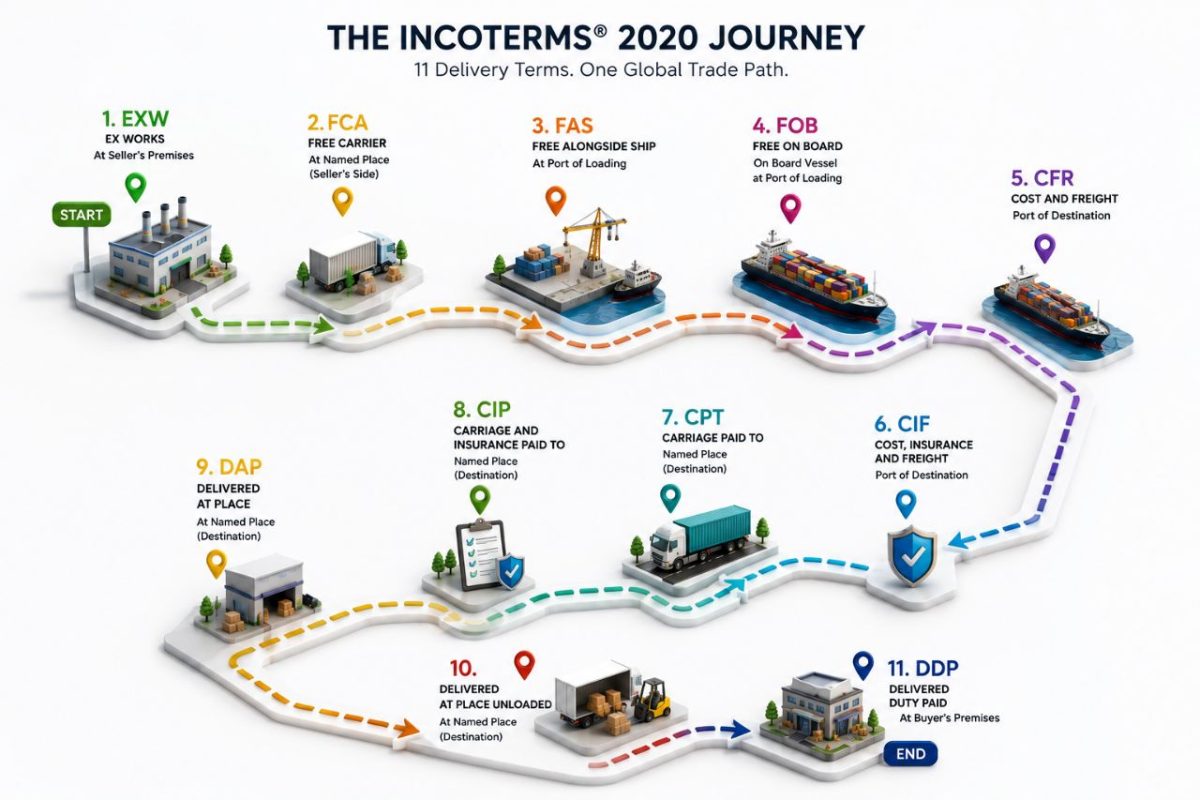
Compare logistics options and agree on the relevant Incoterms rule and named place before confirming the offer.
- Regulations and Buyer Requirements
Food products must comply with the rules applicable in the destination market. Depending on the country and product, buyers may request food-safety documentation, traceability information, laboratory analysis, compliant packaging, or specific certificates.
Always verify the current requirements with the buyer, customs broker, and relevant official authority.
How to Choose the Right Export Market
Use the following practical process to narrow down potential destinations:
- Select target countries: Start with two or three markets that match your supply capacity, product range, and logistics.
- Research real buyers: Identify importers, wholesalers, distributors, repackers, and food manufacturers.
- Confirm product specifications: Ask about variety, grade, size, moisture, packaging, annual volume, and target price.
- Calculate the landed cost: Include product cost, transport, insurance, duties where applicable, and other shipment expenses.
- Check compliance: Verify documentation and import eligibility before promising delivery.
- Send a clear quotation: State the product specification, quantity, packaging, Incoterms rule, payment terms, and offer validity.
- Agree on a trial order: Where commercially appropriate, use a manageable first shipment to evaluate quality, logistics, and communication.
This process helps exporters focus on qualified buyers rather than spending time on markets that look attractive only in trade statistics.
What International Date Buyers Expect from Suppliers
Professional importers generally need more than a low price. They need a supplier who can provide accurate product information and meet agreed contractual terms.
Prepare the following information before approaching potential customers:
- Product details: Variety, grade, size, appearance, moisture level, and intended application.
- Supply capacity: Available quantity per shipment and expected supply schedule.
- Packaging: Carton weight, inner packaging, labeling, palletization, and customization options.
- Quality documentation: Available laboratory reports and other relevant certificates.
- Commercial terms: Price basis, currency, Incoterms rule, payment schedule, and delivery lead time.
- Samples: Availability, cost, and delivery arrangements.
- Export documentation: The documents that can be supplied for the specific destination and transaction.
Clear answers make it easier for a buyer to compare offers and determine whether a supplier can meet its purchasing requirements.
How to Find Reliable Date Suppliers
Importers should evaluate suppliers based on product consistency, communication, verifiable business information, documentation, production or sourcing capacity, and the ability to fulfill contractual commitments.
Before placing a large order, request representative samples, confirm specifications in writing, agree on inspection procedures where appropriate, and verify the commercial terms. Do not rely solely on photographs, social media profiles, or an unusually low quotation.
Exporters can also improve their credibility by presenting a structured product catalog, clear packaging information, relevant quality documents, and realistic delivery commitments.
For more information about international trade statistics, consult the “World Bank’s World Integrated Trade Solution (WITS)” (https://wits.worldbank.org/). For company information and product enquiries, visit “HGHtrade” (https://hghtrade.com/).
Часто задаваемые вопросы
Which country imports the most dates?
Based on the 2024 data used in this guide, India was the leading individual country by import value for dates under HS code 080410, at approximately US$287.3 million.
Which countries are important markets for date exporters?
India, Morocco, the United Arab Emirates, France, the Netherlands, Türkiye, Germany, the United States, the United Kingdom, and Indonesia were among the leading individual importing markets by value in 2024.
The best destination for a particular exporter depends on the variety, quality, price, buyer requirements, and logistics.
What is the HS code for dates?
HS code 080410 covers dates, fresh or dried, in the trade classification used for the statistics in this article. Exporters should confirm the complete customs code applicable in the destination country before shipping.
What should an importer check before buying dates in bulk?
Importers should confirm product variety, grade, moisture, quality specifications, packaging, origin, available test reports, shipment quantity, price basis, payment terms, delivery schedule, and applicable import requirements.
Are Iranian dates suitable for international wholesale markets?
Iranian dates may be suitable for buyers seeking particular varieties, including Mazafati and other commercial date types. Suitability depends on the target market, product quality, supplier eligibility, price competitiveness, and the import rules applicable to Iranian-origin goods.
Importers should verify all applicable legal, customs, sanctions, payment, and food-safety requirements before entering into a transaction.
Conclusion: Turn Market Research into Export Opportunities
The leading date importing countries offer different opportunities for exporters, but trade statistics are only the first step. India stands out for import value and volume, while markets such as the UAE, France, the Netherlands, Germany, the United States, and the United Kingdom may offer opportunities through different wholesale, retail, and food-processing channels.
The most effective export strategy is to match the right product with the right buyer, calculate a realistic landed cost, confirm destination requirements, and provide a clear, verifiable offer.
For importers and distributors, the goal is to find a supplier that can meet agreed specifications and delivery commitments. For exporters, the goal is to build long-term relationships through reliable communication, consistent quality, and professional execution.
Looking for a date supplier or exploring a new wholesale market? Посетите сайт “HGHtrade” to learn more about our business and discuss potential cooperation.